

Men's Equestrian Clothing & Boots
73 items
73 items
73 Results




More About Men's Equestrian
Men's Equestrian
Ariat Men's equestrian gear includes close-fitting riding apparel, English riding boots, outerwear, and accessories designed for comfort, mobility, and a tidy profile in the saddle and around the barn. Build the foundation with Men's Equestrian Training Clothing, then consider how the Different Types of Horseback Riding affect your choice of breeches, footwear, layers, and show clothing.
How Do You Choose Men's Equestrian Gear?
Choose men’s equestrian gear according to your discipline, riding frequency, weather, and whether you are dressing for lessons, barn work, schooling, or competition. A new rider should buy a properly fitted, certified riding helmet first, followed by English riding boots with a defined heel, close-fitting breeches or riding tights, and a fitted shirt that will not bunch or catch.
For lessons and everyday schooling, prioritize stretch, breathability, easy care, and reinforced or grippy contact areas; the Tri Factor Grip Knee Patch Breech is a concrete example of a streamlined breech with knee-patch grip to evaluate. Neutral, tailored breeches generally create the cleanest English rider look because they lie smoothly through the waist, seat, and leg without loose fabric.
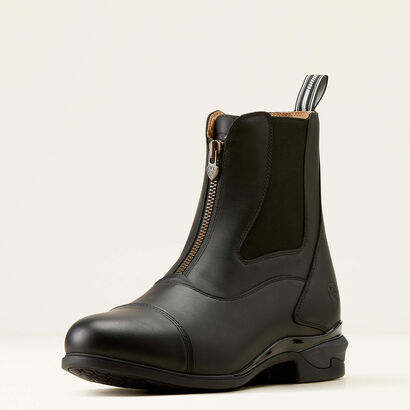
Compare Men's Equestrian Riding Boots based on whether you need paddock boots for lessons and barn days or tall boots for a more formal riding profile. For competitions, consult the applicable rules and use Show Jumping Outfits to assess show coats, shirts, breeches, belts, and boots as one coordinated outfit. Complete the kit with only the practical Men's Equestrian Accessories your routine requires.
How Should Men's Equestrian Clothing and Boots Fit?
Men's breeches should sit smoothly at the waist and remain close through the seat, thigh, and calf without restricting a deep bend at the hip or knee; shirts and jackets should permit a full riding position without billowing. Paddock boots should feel secure around the heel and instep without pinching the toes, and the Heritage Zip Paddock Boot provides a product-specific size and width reference.
Available page filters include apparel sizes from XS through 3XL, select tall sizes, breech sizes from 28 through 50, and footwear sizes from 7 through 15, although availability varies by style. Footwear width filters include B-Medium, D-Medium, and EE-Wide. Use each product’s size chart, measure over the layers you expect to wear, and confirm that you can squat, bend your knees, and hold a riding position without pulling or pressure points.
What Features Matter in Men's Equestrian Gear?
Stretch construction helps riding apparel follow the hips, knees, shoulders, and elbows through mounting, riding, and barn work. Moisture-managing fabric helps move perspiration away from the skin, while breathable or ventilated panels are useful for warm-weather lessons. Knee-patch grip adds targeted contact at the knee; full-seat grip extends contact through the seat and inner leg for riders who prefer more saddle connection.
The Ascent Equestrian Collection brings coordinated, athletic riding products together for shoppers comparing flexibility and technical construction. The broader Ascent Collection offers another route to lightweight, performance-oriented footwear and riding products. For show coats and jackets, look for a close shoulder line, enough stretch to reach forward comfortably, breathable fabric, and styling appropriate to the discipline.
How Do You Care for Men's Equestrian Gear?
Always follow the care label on the specific garment or footwear style first. Turn washable riding garments inside out, wash them cold with similar colors, and close zippers and fasteners before washing; avoid high heat, then hang-dry or use low heat to help preserve fabric, color, stretch, and grip details. Product-specific material and maintenance information for technical outerwear is available with the Rion StretchShell Insulated Jacket.
Brush loose arena dust and mud from riding boots after use, then clean and condition them only with products intended for their material. Allow wet footwear to air-dry away from direct heat, and store apparel and boots in a ventilated place rather than leaving them damp in a closed gear bag.
Ariat was founded to improve footwear for equestrian athletes, bringing athletic-shoe thinking to products made for riding. That purpose remains relevant across men’s breeches, technical layers, paddock boots, tall boots, and accessories designed to support riders through training, competition, and everyday barn routines.
Frequently Asked Questions About Men's Equestrian
Which English riding pants create a clean rider look?
Neutral, close-fitting breeches create the cleanest rider profile. Choose a smooth waistband, minimal pocket bulk, an appropriate inseam, and knee-patch or full-seat grip that lies flat without wrinkling through the seat, thigh, or calf.
What should a man wear for regular riding lessons?
Wear a properly fitted, certified riding helmet, a fitted moisture-managing shirt, breeches or riding tights, and English riding boots with a defined heel. Add a close-fitting jacket or vest when conditions require another layer.
What works best for warm-weather English riding?
Choose lightweight, breathable riding tops and breeches with stretch and moisture-management features. A close but unrestricted fit reduces loose fabric, while ventilated panels and light layers can improve comfort without interfering with movement or required safety equipment.
Should an everyday rider choose knee-patch or full-seat breeches?
Knee-patch breeches provide targeted grip and are a versatile choice for lessons, schooling, and jumping. Full-seat breeches extend grip through the seat and inner leg, making them suitable for riders who prefer additional saddle contact.
How often should men's riding apparel be washed?
Wash riding apparel when sweat, dirt, or odor accumulates, following the individual care label. Turn garments inside out, use cold water with similar colors, avoid high heat, and let grip panels and stretch fabrics dry fully before storage.

