


Donate
Support Care
Articles & News
Field stories
Glossary
Field guides
Water, Energy & Infrastructure
Water Connections
Safe water systems planned, built and maintained with rural communities where no public network exists.
- 5,300-litre ferrocement tanks
- 115 m³ reservoir built at Laindatang
- Rainwater, gravity and solar-pumped systems
Water must reach the home before disease does
In rural East Sumba, water may be several kilometres away, seasonal or visibly unsafe. A reservoir, protected source and working pipe change more than convenience. They change hydration, hygiene, food preparation and the daily exposure of children to preventable infection.
The programme
Water infrastructure built around health
Without a public network, every litre depends on distance, rainfall, storage and the condition of the source. Those constraints become health risks long before a patient reaches a clinic.
Water Connections designs practical systems for the terrain and the people who will use them. Depending on the site, this may mean rooftop rainwater harvesting, a ferrocement tank, a reinforced reservoir, a deep well, a solar pump, gravity-fed piping or a protected distribution point.
The work is carried out with village leaders, families and local builders. Construction is only the beginning. Gutters, lids, filters, pipes, overflow areas and water quality must remain inspectable, repairable and understood by the community.
A compact rainwater system adapted to homes, small groups of families and rural schools.
Large reinforced storage designed for more than 200 people and a local school.
A recent Hudumburung connection carries stored water directly to two homes and around fifteen people.
A solar-powered pump lifts groundwater to a 10,000-litre elevated storage system.
From source to household
How a water system becomes reliable
The visible tank is only one part of the system. Reliability begins with understanding the source and continues through design, construction, protection, distribution and maintenance.
Assess
The team studies the source, rainfall, terrain, household demand, access and the risks around the proposed site.
Design
Storage volume, foundations, catchment area, pumping or gravity and distribution are adapted to local conditions.
Build together
Local builders and families take part so the structure, materials and repair needs are understood close to home.
Protect and connect
Roofs, gutters, filters, sealed storage, overflow and pipes are installed as one continuous water pathway.
Inspect and maintain
Leaks, cracks, contamination risks and damaged components are identified, corrected and followed over time.
Water safety is continuous
A full tank is not automatically a safe tank
Safe access depends on the complete pathway from catchment or source to storage, pipe and household container. A weakness at any point can reintroduce contamination or interrupt supply.
What the system must protect
- A source or roof catchment kept away from avoidable contamination
- Gutters and first-flow components aligned and clear of debris
- A sealed tank with a protected lid and controlled access
- Filtration appropriate to the source and intended use
- Clean pipes, taps and household collection containers
- Drainage and overflow that do not create stagnant water
When corrective action is needed
- Cracks, leaks, unstable foundations or damaged tank walls
- Rust, open inspection holes or a lid that no longer seals
- Broken gutters, blocked filters or unburied damaged pipes
- Visible contamination, unusual colour, odour or persistent turbidity
- Standing overflow water that increases mosquito or hygiene risks
- Concerning test results or a cluster of diarrhoeal illness after use
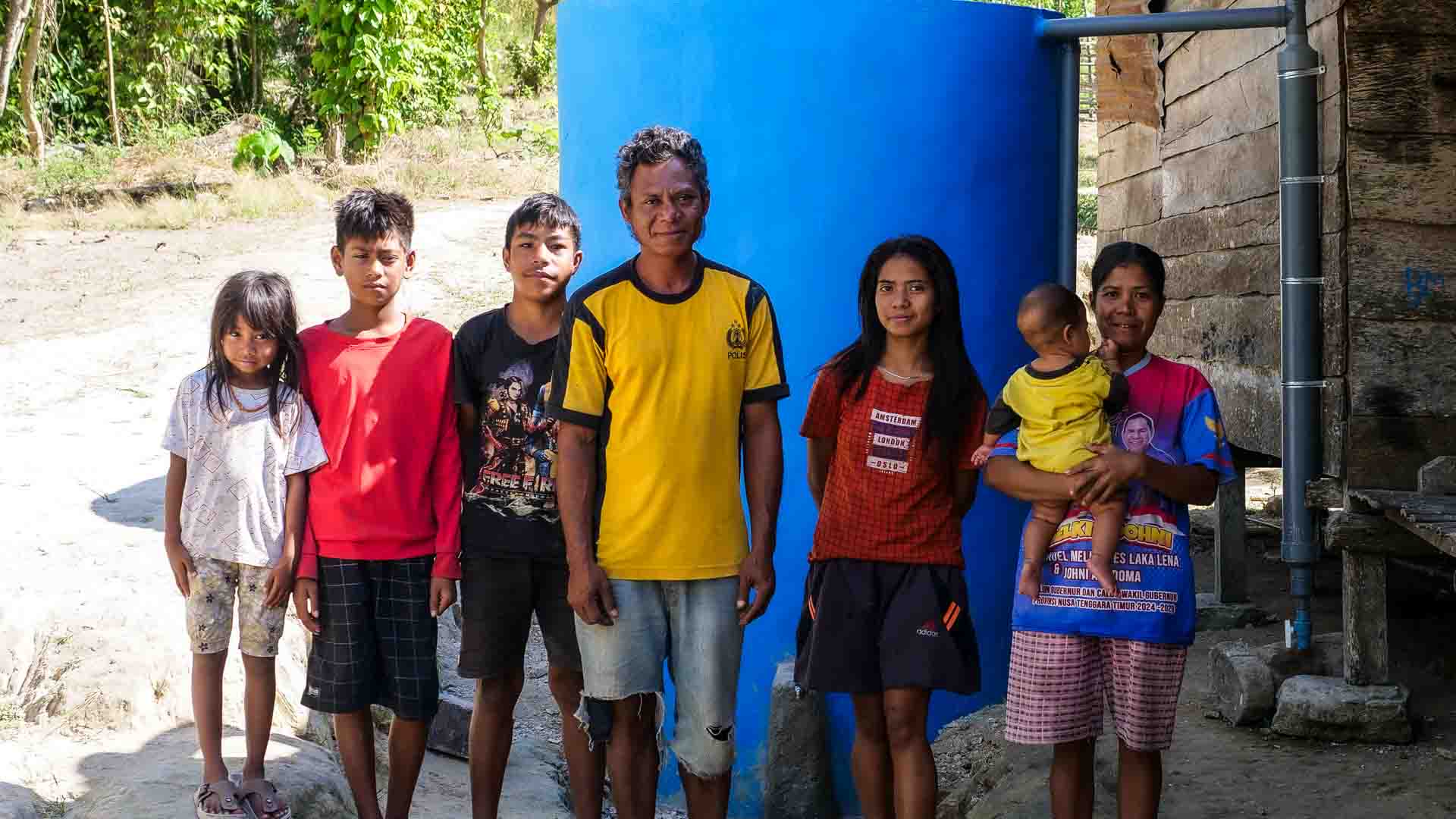
A reservoir is useful only when its catchment, filtration, structure, overflow and distribution remain safe and repairable.
The system behind every tap
Engineering that can be maintained locally
A tank alone is not water access. Each project combines source assessment, structural choices, protected storage, distribution and a maintenance plan. The aim is not technical complexity. It is a system that fits the terrain, can be inspected and can keep working after the construction team leaves.
Site assessment
Rainfall, groundwater, access, soil, terrain and household demand guide the design before materials arrive.
Reinforced storage
Ferrocement tanks and larger reinforced reservoirs are sized and built for the community and site conditions.
Protected distribution
Filters, pumps, gravity-fed HDPE pipe, taps, overflow and drainage move water without losing control of safety.
Water monitoring
Field checks and the Rumah Kambera laboratory support testing for microbial, physical and chemical indicators.
What changes in practice
Safe water changes the conditions in which illness begins
Less time collecting water
A household connection can return hours of walking, waiting and transport to families, especially women and children.
Safer daily hygiene
Water close to home makes handwashing, wound cleaning, food preparation and household cleaning more consistent.
Water where children learn
School storage supports drinking, toilets, cleaning and basic infection prevention throughout the day.
Stronger dry-season continuity
Storage, protected sources and planned distribution reduce dependence on a single distant or seasonal collection point.
Final reportLaindatang 115 m³ reservoirRead the technical and field report for a large rainwater system serving more than 200 people and a school.
Project areaLaindatang & HambaritaExplore the linked reservoirs, filtration, construction and village water systems developed across these communities.
Child healthUnsafe water and childhood diarrhoeaUnderstand how contaminated water, dehydration and malnutrition reinforce one another in rural families.
Live field recordField Notes from Eastern IndonesiaFollow dated updates on construction, repairs, water access, health and the realities encountered by field teams.
Field guide & glossaryWater and sanitation, explainedExplore practical terms and field guides related to water safety, storage, hygiene and public health.
Public health referenceDrinking-water and healthRead the international evidence connecting safe water, sanitation, infection prevention and health.
Water and sanitation referenceWater, sanitation and hygieneExplore the wider framework linking safe water access, hygiene, childhood health and dignity.